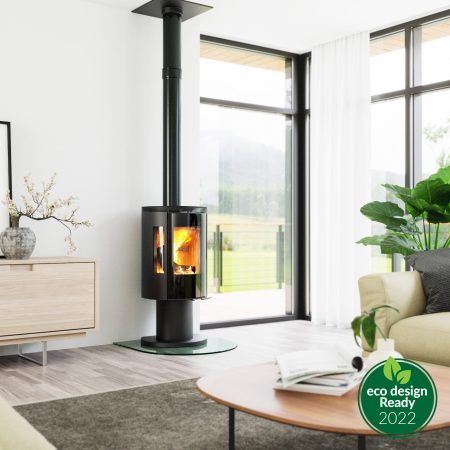
Does Installing a Stove Improve Your BER Rating?
Yes, it can.
By Leo, Chimney Tech installer with 20+ years experience.
When a stove is installed, a new flexible flue liner is typically fitted from the top down. This liner connects directly to the stove, and the entire system—both the stove and the flue liner—is then insulated with non-combustible insulation material.
By fully insulating the stove and chimney, heat loss is significantly reduced, which can lead to a noticeable improvement in your Building Energy Rating (BER).
More questions about stoves and BER ratings
By how much can a stove improve my BER rating?
There is no fixed uplift. It depends on the stove’s efficiency, what heating it replaces or supplements, and how well the flue is insulated. Your BER assessor models the installed system, so the improvement varies from home to home.
Is an insulated flue liner required?
A flexible flue liner is standard with a stove installation, and insulating it with non-combustible material cuts heat loss up the chimney. Better insulation keeps more heat in the room, which is what helps the BER.
Does a BER assessor treat a stove as a main heat source?
Usually it is recorded as a secondary heat source alongside your main central heating. It still contributes to the rating because it reduces the load on the primary system and cuts overall heat loss.
What will a BER assessor need to see for the stove?
The stove make and model, its efficiency rating, and the flue and liner setup. Keep your installation certificate and the stove manual so the assessor can record accurate details.
Sample Stove Installations in Dublin


About the author: Leo is a Chimney Tech installer with 20+ years of experience fitting stoves, lining chimneys and sweeping flues across Dublin, Kildare, Meath, Cavan and Wicklow.